
English| EUR
Suggested for you
More currencies
Choose a language
The Hauraki Gulf supports year-round cetacean activity, but sighting frequency and species diversity shift with water temperature and prey migration. Understanding the seasonal rhythm helps visitors choose departure dates that align with peak whale movement and favorable sea conditions.
Quick answer
The auckland whale watching season operates year-round with daily departures at 10:30, but July through October delivers the highest sighting rates as Bryde's whales concentrate in gulf waters and migrating humpbacks pass through the outer reaches. Orcas appear sporadically between November and March, while common and bottlenose dolphins remain present across all months. Weather conditions stabilize from late spring through early autumn, reducing cancellation risk.
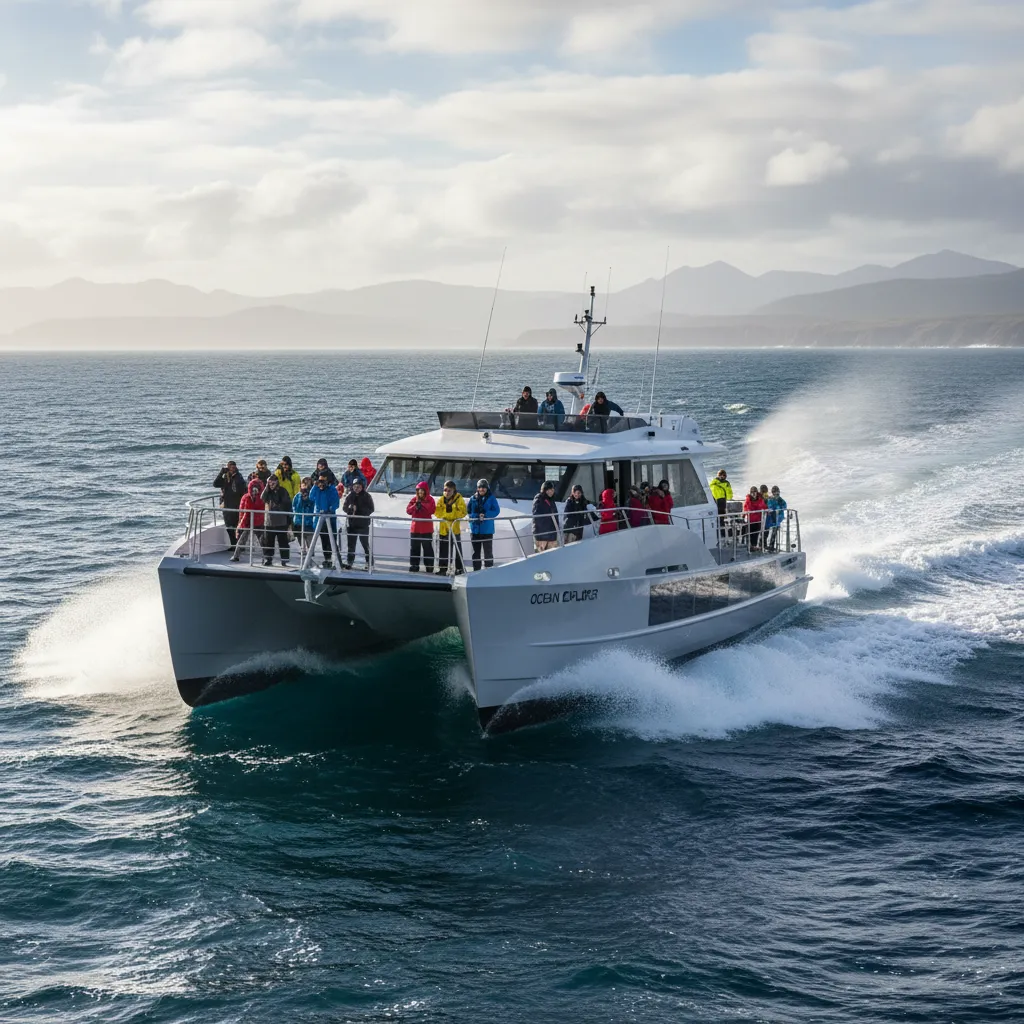
Bryde's whales maintain a resident population in the Hauraki Gulf throughout the calendar year, making this one of the few temperate-zone locations where baleen whales can be encountered in any month. These mid-sized rorquals feed on pilchard schools that aggregate near the Mokohinau Islands and along the shelf edge northeast of Tiritiri Matangi, with feeding intensity peaking during winter as fish stocks concentrate in cooler water. The auckland whale watching season reaches its statistical peak between July and October, when Bryde's whale sightings climb above 80 percent across most departures and humpback whales begin their northward migration through the outer gulf. Humpbacks travelling from Antarctic feeding grounds to Pacific breeding areas pass the eastern approaches of Great Barrier Island in pulses from late June onward, with calves visible on the return leg from September through November. Orcas patrol the inner gulf unpredictably, with encounter rates highest during summer months when stingray and eagle ray populations move inshore. Weather patterns exert direct influence on departure reliability and sighting quality. Winter months from June through August bring stronger southwest swells and reduced visibility windows, though calmer multi-day intervals still occur between frontal systems. Spring and early summer offer the most stable sea states, with light northeast winds and high-pressure blocking systems creating mirror-calm conditions that allow surface behavior to be spotted at extended range. Surface water temperature drops to 14–15°C in August and rises to 20–22°C by February, a shift that corresponds with seasonal changes in prey distribution and whale foraging depth. Cetacean diversity peaks during the spring transition when resident species overlap with transient migrants. Common dolphins form superpods of several hundred individuals in October and November, often bow-riding and breaching in coordinated groups. Bottlenose dolphins remain present year-round in smaller coastal pods. The 4.5-hour marine safari format allows vessels to cover the productive zone between Rangitoto Channel and the Mokohinau shelf, where depth gradients and tidal mixing create the nutrient conditions that sustain the gulf's year-round marine mammal community.
“Bryde's whales maintain a resident population in the Hauraki Gulf throughout the calendar year, making this one of the few temperate-zone locations where baleen whales can be encountered in any month.”
The Hauraki Gulf supports marine life year-round, but the period from November to May typically offers more consistent weather conditions for spotting Bryde's whales and common dolphins. While whales are present throughout the year, these warmer months often align with calmer seas that improve visibility.
Warm, 18°C–24°C; lower wind speeds.
Calmer sea states during these months generally assist in spotting marine mammals at the surface.
Cooler, 12°C–16°C; higher chance of rain.
While sightings occur, increased wind and swell can occasionally lead to more challenging conditions for observation.
—
Mid-week departures frequently experience fewer passengers, allowing for more space on viewing decks.
Verdict: For the best balance of calm sea conditions and wildlife visibility, aim for visits between November and May on a weekday morning.
Whale watching in the Hauraki Gulf follows a clear migratory calendar, with peak sightings concentrated in specific months. Understanding the seasonal patterns helps you choose the right window for your visit.
Bryde's whales remain year-round in the Gulf, while orcas peak during summer months (December–February) and common dolphins appear most frequently in autumn and spring. Book during the warmer half of the year for the broadest species variety.
Calm seas between November and April offer the most stable conditions, though winter departures still operate when safe. The operator assesses conditions daily and will contact you if a rescheduling is required.
Capacity fills quickly during peak summer and school holidays. The booking system at whalewatchingauckland.com shows real-time availability and confirms your departure date.
Check-in opens 15 minutes before the 10:30 departure at Berth 9, Eastern Viaduct Marina. Late arrivals cannot be accommodated as the vessel departs on schedule.
Temperatures drop 5–8 degrees once you leave the harbor, and wind chill increases with boat speed. Bring a windproof jacket even on warm Auckland days.
The Hauraki Gulf whale watching tours operate on a consistent daily schedule throughout the season. All departures follow the same operational hours to facilitate the marine safari schedule.
The marine safari departs from Berth 9 at the Eastern Viaduct Marina, located in the central Auckland waterfront district. The area is accessible via major public transport hubs and vehicle routes leading toward the Auckland CBD.
Britomart Station to Eastern Viaduct
Central City stops to Quay Street
State Highway 1 to downtown parking buildings
From CBD / Ferry Terminal
Check-in is required 15 minutes prior to the 10:30 departure. Plan to arrive at the marina between 10:30 and 14:00 to ensure sufficient time for boarding.
Essential items and actions for a successful whale watching departure from Auckland's Hauraki Gulf.
Everything you need to know about auckland whale watching season
The auckland whale watching season generally spans throughout the year as the Hauraki Gulf supports diverse cetacean populations, though spring and summer often offer calmer sea conditions. Marine mammals are wild animals, meaning specific sightings depend on migratory patterns and daily ocean activity.
While operators strive to locate wildlife, nature is unpredictable and sightings cannot be guaranteed on every voyage. Safety and animal welfare remain the primary focus during these wildlife tours in the Hauraki Gulf.
The standard adult ticket price for the 4.5-hour marine safari is 165 NZD. This fee provides access to the vessel and expert commentary regarding the local marine ecosystem.
Each marine wildlife excursion is designed as a 4.5-hour experience on the water. This duration allows sufficient time to travel from the Eastern Viaduct Marina into the wider Hauraki Gulf.
Yes, you can secure your spot by visiting the official site at https://www.whalewatchingauckland.com. Advance booking is recommended to ensure availability during peak periods of the auckland whale watching season.
Yes, passengers are required to check in at least 15 minutes prior to the 10:30 departure. Arriving within the 10:30–14:00 window ensures a smooth boarding process for all guests.
The marine safari is generally suitable for families, provided children are supervised at all times near the vessel rails. Please consider the duration of the trip and potential sea conditions when planning your visit.
During the auckland whale watching season, visitors may encounter Bryde's whales, common dolphins, and occasionally orca or pilot whales. The Hauraki Gulf is a protected marine park, providing a critical habitat for these species.