Auckland Whale Watching
Tours & tickets

Hand-picked by our editors — only the best 5 wildlife cruises from 47 reviewed.

Open today 06:30–20:00
Attendance: Moderate — August winter season
Check weather conditions prior to departure for your private whale watching auckland trip.
Free cancellation Instant confirmation Mobile voucher Verified partner Book now, pay later
Tickets

Choose your ticket

Verified partners for every tour, free cancellation where available, and instant confirmation on every booking.

Hauraki Gulf Wildlife & Islands Discovery Cruise 6 hr
Guided Experience

Hauraki Gulf Wildlife & Islands Discovery Cruise

4.1 (346)
€86
per person
Instant Mobile voucher Flexible — change up to 24h

Six-hour voyage through Tikapa Moana searching for whales and dolphins, with island shore time

Reserve
Bay of Islands Full-Day Adventure with Dolphin Cruise 13 hr
Guided Experience

Bay of Islands Full-Day Adventure with Dolphin Cruise

4.9 (16)
€241
per person
Instant Mobile voucher Flexible — change up to 24h

Full-day escape from Auckland to cruise 144 islands, spot marine wildlife, and swim at a pristine island bay

Reserve

Prices from verified partners. Availability updates in real time at checkout. Free cancellation policies apply where shown.

Highlights

What you'll see inside the attraction

The landmarks, rooms, and views travelers on this tour remember — all visible on a single visit.

Dolphin Explorer Catamaran

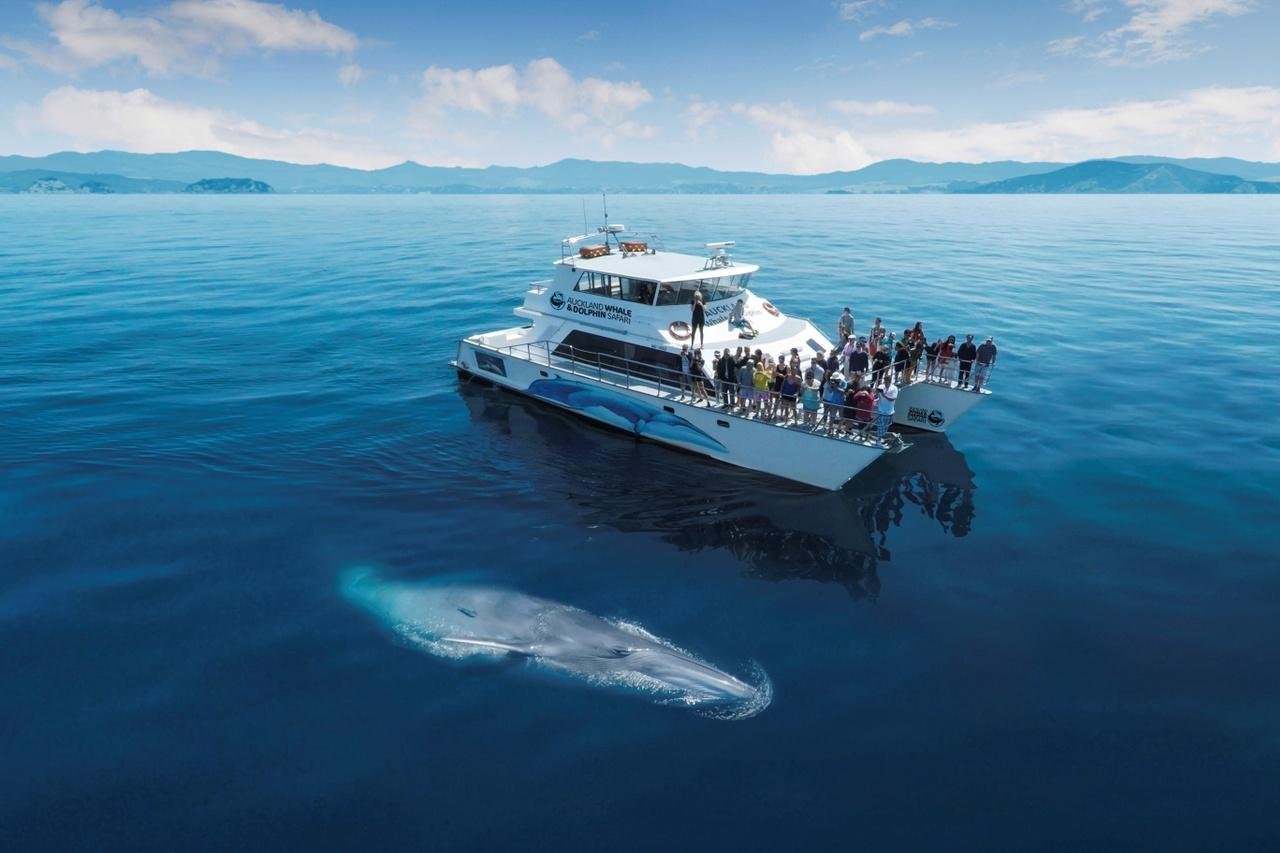
A 65-foot purpose-built vessel equipped for marine research and guest comfort during your private whale watching auckland tour.

Rangitoto Island

An iconic volcanic landmark visible from the water during your private whale watching auckland trip, known for its symmetrical cone.

Harbour Bridge

A major Auckland landmark providing a scenic backdrop as you begin your private whale watching auckland adventure.

North Head

A historic site and headland visible from the Hauraki Gulf, offering unique coastal vistas during your private whale watching auckland tour.

Marine Research Station

Onboard area where guests can interact with scientists and learn about local conservation during their private whale watching auckland visit.

Head to head

Private Whale Watching Auckland vs Auckland Harbour Sightseeing Cruises — Which Is Better?

They complement one another; most travelers who do both call the marine research focus of private whale watching auckland tours the more immersive, while the harbour cruise offers a more relaxed social outing.

Feature Top pick Hauraki Gulf Whale Watch Harbour Sightseeing
Wildlife Guarantee
No
Primary Focus
Scenic city landmarks
Duration
1.5–2 hours
Cost
Tour price varies
Vessel Size
Large multi-level ferry
Educational Content
General maritime history

Verdict: Choose private whale watching auckland tickets if you prioritize deep-sea discovery, or select the general sightseeing cruise for a casual Auckland harbour tour.

How your ticket works

Book your ticket in 3 steps

  1. 01

    Book online

    Choose your ticket, select your date, and reserve in under two minutes. Secure checkout handled by our verified partner.

  2. 02

    Receive your mobile voucher

    Instant confirmation by email, with a mobile voucher you can save offline. No printing, no queuing at a collection desk.

  3. 03

    Show & enter

    Arrive at the entrance, show your voucher on your phone, and walk in. Most tickets include priority or skip-the-line access.

Plan your visit

Everything you need to know before you go

Practical details for your visit straight from our verified partners — hours, access, rules, and how to get there.

Open today · 06:30–20:00
Opening hours
06:30–20:00
Address
Berth 9, Viaduct Harbour, Auckland 1010, New Zealand
Accessibility
Purpose-built catamaran with wide decks
Best arrival window
06:30–10:15
Storage
Limited space available on board
Navigation
Located in Viaduct Basin central district
Mon
06:30–20:00
Tue
06:30–20:00
Wed
06:30–20:00
Thu
06:30–20:00
Fri
06:30–20:00
Sat
06:30–20:00
Sun
06:30–20:00
Location

Address
Berth 9, Viaduct Harbour, Auckland 1010, New Zealand
Storage
Limited space available on board
Navigation
Located in Viaduct Basin central district

Dress code

Wear warm, windproof layers and non-slip footwear suitable for a marine environment. Even in summer, the Hauraki Gulf can be breezy on the water during a private whale watching auckland tour.

Bags & security

Keep personal belongings minimal as storage space on the vessel is limited. Secure all loose items before the private whale watching auckland boat departs.

Photography

Photography is encouraged during your private whale watching auckland excursion, though flash should be avoided to protect marine life. Bring a waterproof cover for your camera equipment.

Accessibility

The vessel is designed to accommodate various needs, but please notify the team in advance for specific requirements. Accessible facilities are available near the Viaduct Harbour departure point.

What to bring

  • Sunscreen
  • Sunglasses
  • Windproof jacket
  • Camera
  • Water bottle
  • Comfortable shoes

Not allowed

  • Drones
  • Alcohol
  • Large hard-shell suitcases
  • Dangerous goods
  • Flash photography (near animals)
  • Professional recording equipment
  • Pets
  • Illegal substances

Families & strollers

This activity is highly suitable for children, offering an educational look at marine conservation. Many families find a private whale watching auckland tour to be a highlight of their trip.

Food & drink

A licensed café and bar are available on board for refreshments during your private whale watching auckland tour. Bringing your own light snacks is generally permitted.

Around your visit

Everything else worth knowing

Best time to go, insider tips, nearby landmarks, and the cancellation fine print — flip through to skim what matters to you.

Cancellation policy

Flexible, no hidden fees.

Cancellations made within the specified operator window are subject to the terms of your booking. No entrance fee of 0 NZD applies to the tour cost.

About

The place, in context

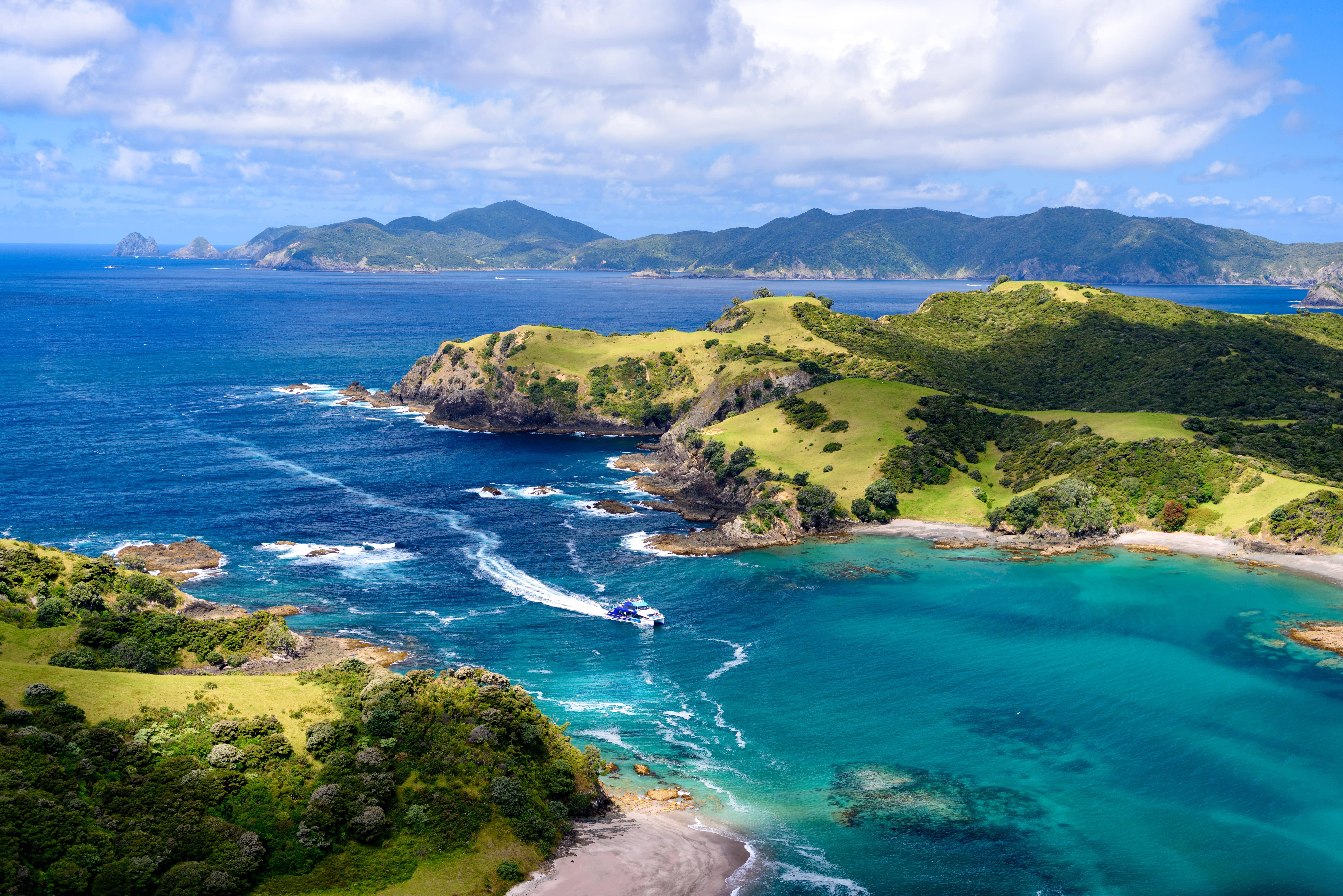
The Hauraki Gulf Marine Park shelters seventeen species of cetacean year-round, making it one of the Southern Hemisphere's most reliable whale-watching grounds within sight of a major city. Bryde's whales patrol the outer gulf between February and November, their forty-tonne bulk surfacing within minutes of Auckland's skyline. Private whale watching auckland excursions depart from Viaduct Harbour, where eco-certified operators navigate the twenty-kilometre channel past Rangitoto Island and into the open Hauraki Gulf, a marine park spanning 1.2 million hectares and protected under New Zealand's Marine Mammals Protection Act since 1978. The gulf's convergence of warm subtropical and cool southern currents generates nutrient upwellings that sustain dense schools of pilchard and anchovy, drawing Bryde's whales, common dolphins, and occasional orca pods into shallow coastal waters. Bryde's whales, unique among baleen species for their year-round residency in temperate zones, feed at depths of thirty to fifty metres, their dorsal fins visible from the surface as they lunge through baitfish shoals. Bottlenose dolphins frequent the inner gulf near Tiritiri Matangi Island, while long-beaked common dolphins travel in superpods of up to three hundred individuals, their coordinated dives creating surface disturbances visible from two kilometres. Private charters maintain a two-hundred-metre exclusion zone mandated by the Department of Conservation, and skippers cut engines when cetaceans approach voluntarily. Viaduct Harbour's commercial fleet includes rigid-hull inflatables and catamaran cruisers equipped with hydrophones, allowing passengers to monitor whale vocalisations below the surface. The gulf's underwater topography—a series of submerged volcanic ridges and troughs—creates acoustic channels that carry humpback whale songs across fifty kilometres during their June-to-August migration corridor. Marine biologists note that Auckland's urban runoff and shipping lanes intersect critical feeding zones, and private whale watching auckland tours operate under strict noise and waste protocols to minimise disturbance. The Department of Conservation's Marine Mammal Viewing Code requires operators to approach from the side rather than head-on, maintain constant speed, and limit interactions to thirty minutes per pod. The gulf's volcanic islands—Rangitoto, Motutapu, Waiheke—serve as navigation landmarks for cetaceans moving between the outer Hauraki plateau and the Firth of Thames. Orca sightings peak in January and February, when transient pods hunt stingrays along the eastern shoreline of Waiheke Island. Charter operators coordinate sightings via VHF radio, pooling data to track pod movements without clustering vessels. The Marine Mammals Protection Act prohibits swimming with whales and feeding marine mammals, and private charters enforce passenger briefings covering approach distances and camera flash protocols to ensure compliance with conservation standards.

"Seventeen species of cetacean patrol the Hauraki Gulf year-round, their feeding grounds visible from Auckland's harbourfront."
Your experience

What a tour day looks like

A step-by-step walkthrough of the visit — what you'll see, how long each stage takes, and the details that matter.

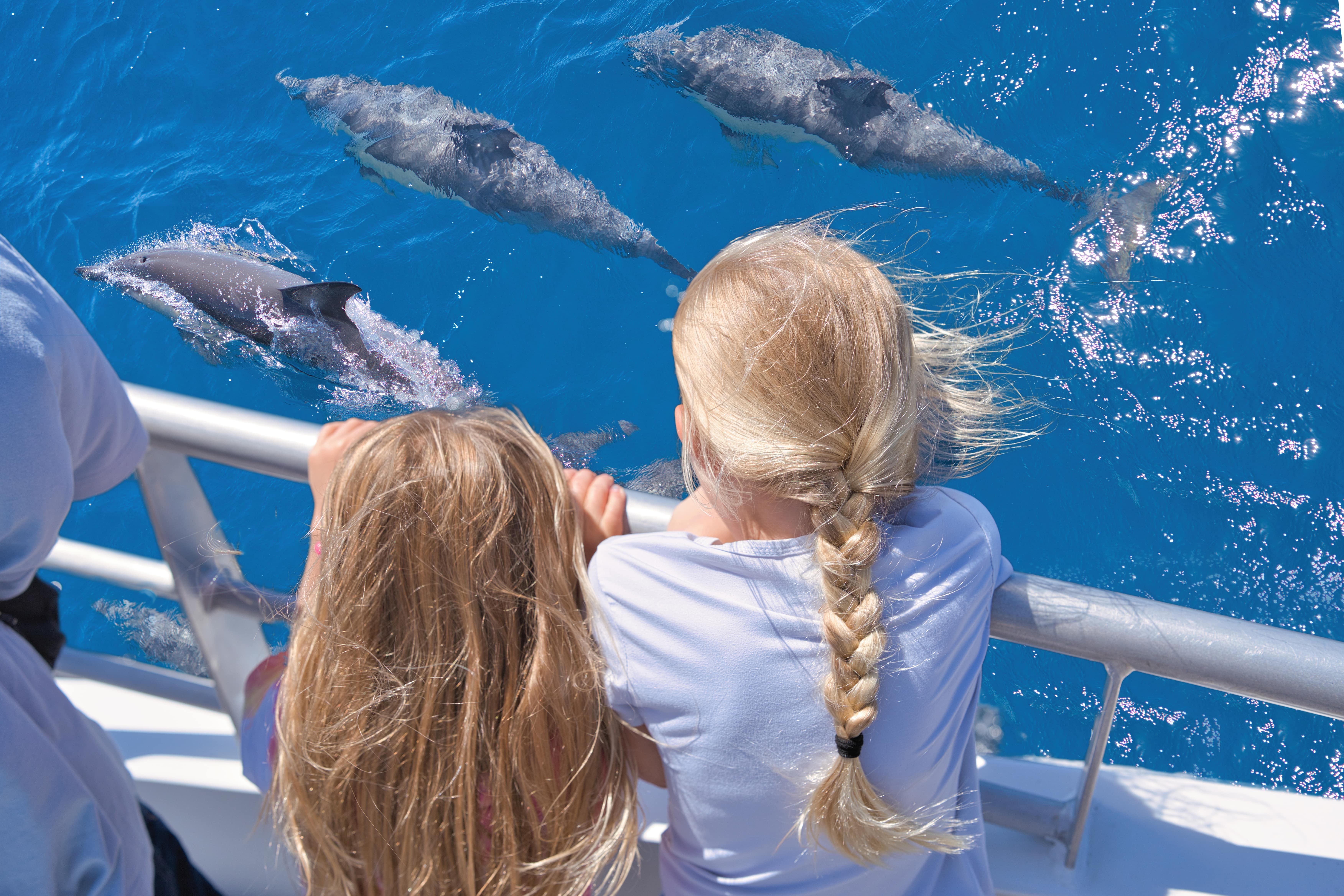
You board at Berth 9 in Viaduct Harbour thirty minutes before departure, the skipper briefing you on the Marine Mammal Viewing Code while deckhands secure life vests and hydrophone equipment. The rigid-hull inflatable clears the harbour breakwater at eight knots, its twin outboards pushing through the channel between Auckland's commercial wharves and the forested cone of Rangitoto Island. Within fifteen minutes the skyline recedes and the gulf opens, the water shifting from harbour green to deep cobalt as the seabed drops from twenty to sixty metres. The skipper cuts speed and raises binoculars, scanning for dorsal fins or the misty exhalation plume of a surfacing whale. The hydrophone crackles with clicks and whistles—common dolphins echolocating beneath the hull. A pod of thirty animals materialises off the port bow, their bodies slicing through the surface in synchronised arcs. You grip the gunwale as the dolphins bow-ride, their pale flanks flashing three metres below the waterline. The skipper holds position, engine idling, while the pod circles twice before peeling away toward Tiritiri Matangi. Twenty minutes later, a dark ridge breaks the surface two hundred metres ahead—a Bryde's whale, its back rolling through the water in a slow, deliberate curve. The dorsal fin appears, then the tail stock, before the animal submerges. You wait. Sixty seconds pass. The whale surfaces again, closer now, its blowhole releasing a vertical spout visible against the horizon. The skipper notes the sighting coordinates and cuts the engine. You watch in silence as the whale feeds, its path tracked by the oily slick left on the water's surface.

Frequently asked

Frequently asked questions about private whale watching auckland tours

What are the opening hours for private whale watching auckland?

The operator is open from 06:30–20:00 daily to facilitate your private whale watching auckland experience.

Is there an entrance fee for private whale watching auckland?

There is a 0 NZD entrance fee; however, costs apply for boat cruise tickets.

How should I prepare for my private whale watching auckland tour?

Dress in layers and bring sun protection for your private whale watching auckland excursion.

Are there age restrictions for these tours?

There are no specific age restrictions, making it an ideal family activity for a private whale watching auckland tour.

Can I bring my own food on my private whale watching auckland tour?

You may bring snacks, but a licensed café is available during your private whale watching auckland journey.

Where is the meeting point for private whale watching auckland?

The meeting point is Berth 9, Viaduct Harbour, Auckland 1010, New Zealand.

What happens if the weather is poor for my private whale watching auckland tickets?

The operator prioritizes safety and will notify you regarding any changes to your private whale watching auckland schedule.

Is professional photography equipment allowed on a private whale watching auckland tour?

Yes, but please ensure it does not interfere with the experience of others during your private whale watching auckland tour.

When is the best time to arrive for private whale watching auckland?

We recommend arriving between 06:30–10:15 for the optimal private whale watching auckland wildlife viewing window.