
4 hr 30 min
Hauraki Gulf Whale & Dolphin Eco-Cruise
Half-day marine wildlife expedition aboard a luxury catamaran in Auckland's protected marine park
Reserve
Hand-picked by our editors — only the best 5 cruises from 12 reviewed
Verified partners for every tour, free cancellation where available, and instant confirmation on every booking.
4 hr 30 min
Half-day marine wildlife expedition aboard a luxury catamaran in Auckland's protected marine park
Reserve
6 hr
Six-hour marine adventure through island-dotted waters with whale and dolphin spotting plus vineyard or wildlife stop
Reserve
13 hr
Full-day journey to the Bay of Islands with island hopping, marine wildlife spotting, and Hole in the Rock cruise
ReservePrices from verified partners. Availability updates in real time at checkout. Free cancellation policies apply where shown.
The landmarks, rooms, and views travelers on this tour remember — all visible on a single visit.
This protected area spans over 1.2 million hectares and supports diverse marine species
Wildlife spotting
Marine Research
Coastal Views
Wildlife Photography
They complement each other; most visitors who do both call the marine cruise the more thrilling interaction with the Hauraki Gulf ecosystem. Choosing between these Auckland whale and dolphin watching tours depends on whether you seek wild wildlife encounters or leisurely island exploration.
| Feature | Top pick Marine Cruise | Waiheke Ferry & Bus |
|---|---|---|
Primary Focus |
Marine wildlife observation | Island sight-seeing and vineyards |
Marine Life Guarantee |
High likelihood of sightings | None |
Activity Level |
Passive boat transit | Active walking and transit |
Duration |
4.5 hours | Flexible duration |
Best For |
Nature enthusiasts | Leisure and wine lovers |
| See tickets → |
Verdict: Select the auckland whale and dolphin watching tour for deep-sea immersion, or choose the ferry for flexible land-based recreation with your auckland whale and dolphin watching tickets kept for another day.
Choose your ticket, select your date, and reserve in under two minutes. Secure checkout handled by our verified partner.
Instant confirmation by email, with a mobile voucher you can save offline. No printing, no queuing at a collection desk.
Arrive at the entrance, show your voucher on your phone, and walk in. Most tickets include priority or skip-the-line access.
Practical details for your visit straight from our verified partners — hours, access, rules, and how to get there.
Eastern Viaduct Marina, Auckland
Look for the tour operator signage near the waterfront
Use the Britomart Transport Centre hub which is a 5-minute walk away.
Park at the Downtown Car Park nearby and walk to the marina.
Wear warm, windproof layers and non-slip, flat-soled shoes suitable for a moving boat. Even during summer months, sea breezes can be cool.
Keep belongings minimal as storage space on board is limited. Secure items during transit to prevent them from sliding on deck.
Photography is encouraged, but use a neck strap to prevent equipment from falling overboard. Telephoto lenses are helpful for capturing marine life from a distance.
The operator makes every effort to accommodate passengers with mobility issues. Please contact the team in advance to ensure the specific vessel scheduled for your auckland whale and dolphin watching excursion is accessible.
Mobile phones are permitted for photos. Signal may be weak once you move far into the Hauraki Gulf.
Children are welcome on board, but must be supervised by an adult at all times. The experience is educational, focusing on the Hauraki Gulf marine ecosystem.
Complimentary tea and coffee are provided on many sailings. You are welcome to bring a water bottle and small snacks for your auckland whale and dolphin watching journey.
Pets are strictly prohibited on board the vessels for the safety of both the animals and the marine wildlife.
As auckland whale and dolphin watching trips depend on sea conditions, sightings are not guaranteed. The crew provides live commentary about the marine conservation efforts in the area.
Eastern Viaduct Marina, Auckland
Look for the tour operator signage near the waterfront
Get directionsBest time to go, insider tips, nearby landmarks, and the cancellation fine print — flip through to skim what matters to you.
How crowds, weather, and events shift across the year.
December to February offers warmer weather and frequent sightings.
March to May provides calm waters and consistent marine activity.
June to August is cooler but features unique migratory species.
September to November is active as the water temperatures begin to rise.
Small details that turn a good visit into a great one.
Drink plenty of water to prevent seasickness during your auckland whale and dolphin watching cruise.
Even on cloudy days, UV rays are strong on the water.
Dress in multiple layers to adjust to changing wind speeds on the ocean.
Bring binoculars to help spot dolphins or whales from a distance.
Follow the 06:30–10:30 arrival window to enjoy smoother seas and more active wildlife.
Non-bookable sights within a short walk — free to visit, easy to pair.
Displays the rich seafaring history of the nation.
A reclaimed industrial area with restaurants and paths.
Offers a panoramic view of the entire Auckland skyline.
The primary hub for city dining and luxury vessels.
Flexible, no hidden fees.
Cancellations made at least 24 hours in advance receive a full refund. The entrance fee is 0 NZD, though total tour fees are subject to the operator's specific booking terms.
Hand-picked options within walking distance — pick a district for vibe, or a specific hotel for convenience.
Upscale hotel overlooking the marina.
Modern design hotel in the central district.
Functional rooms near the transport hub.
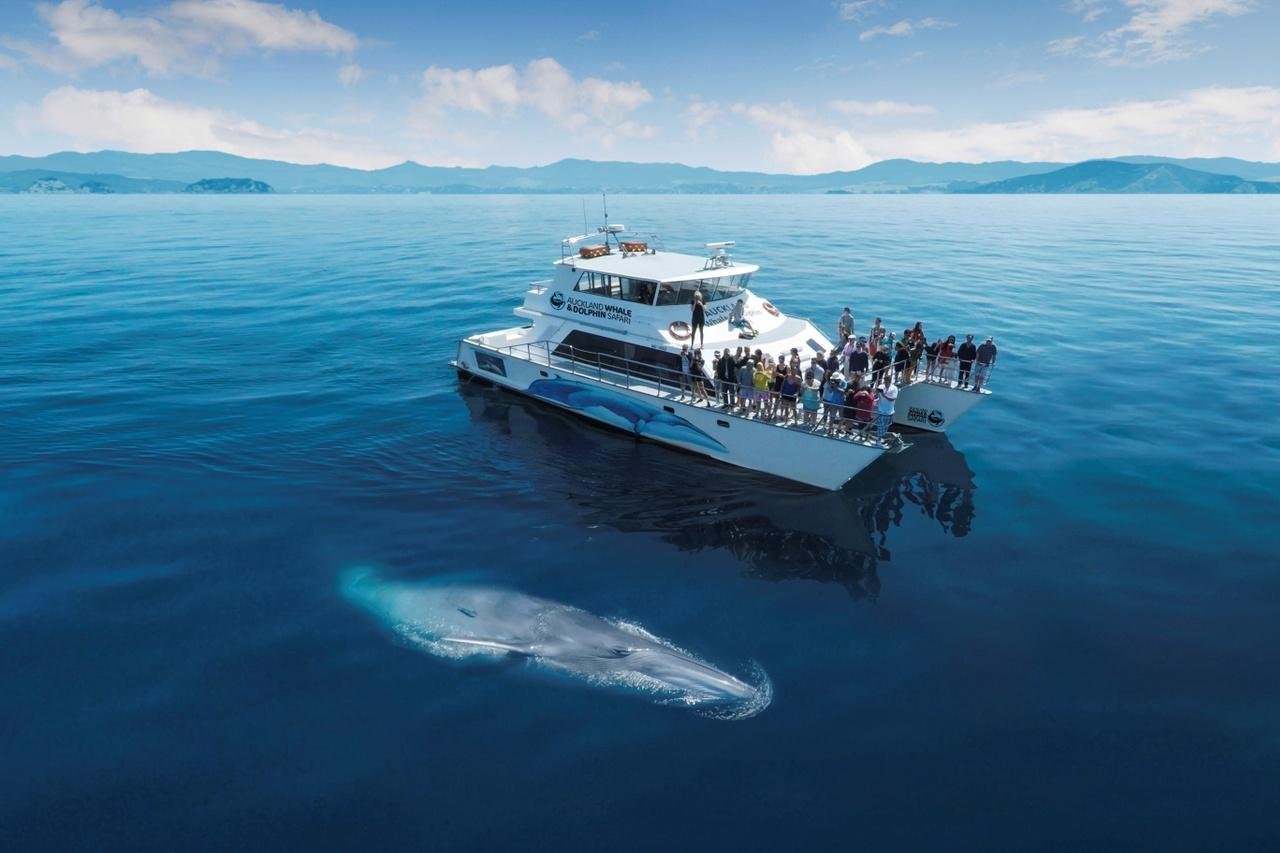
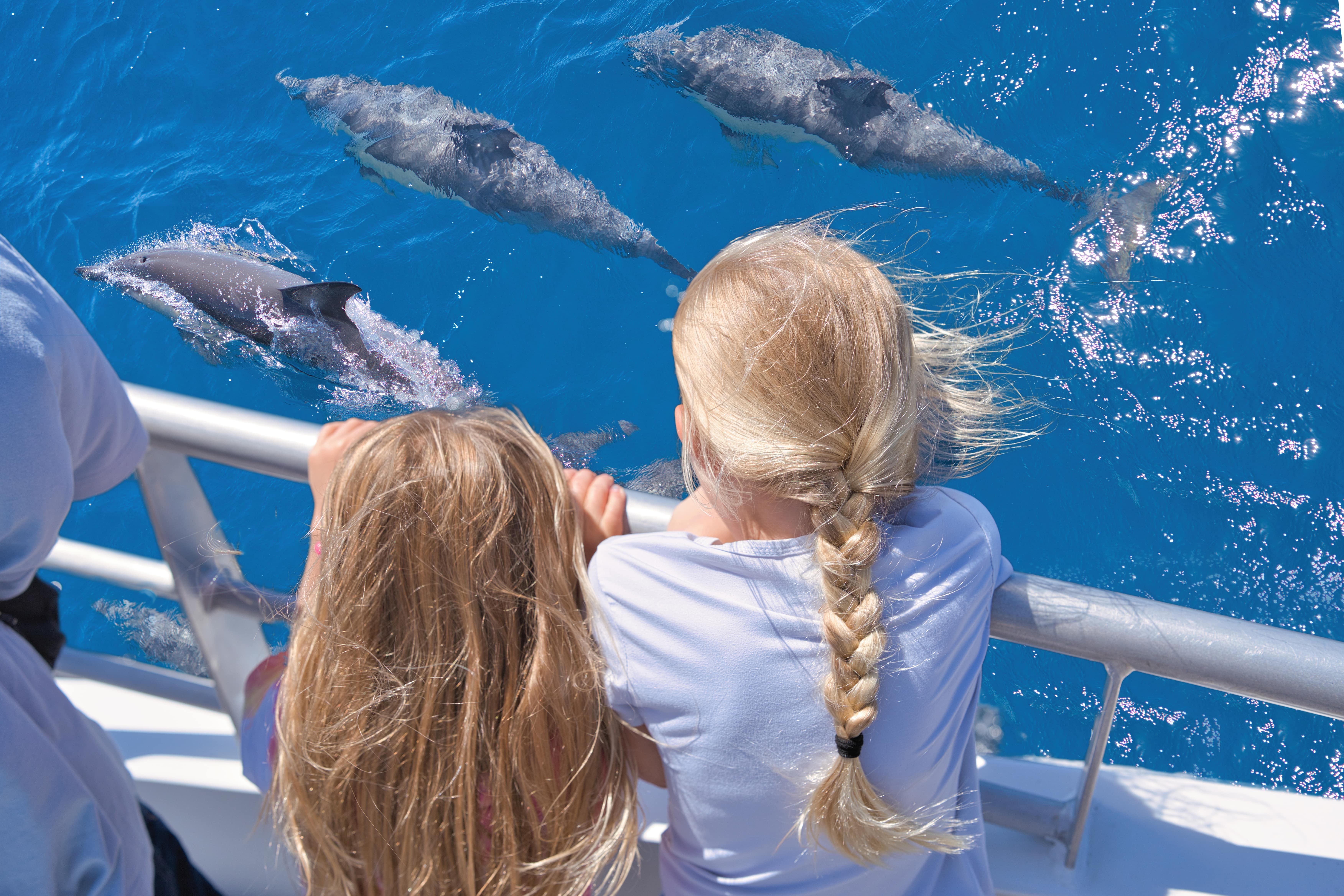
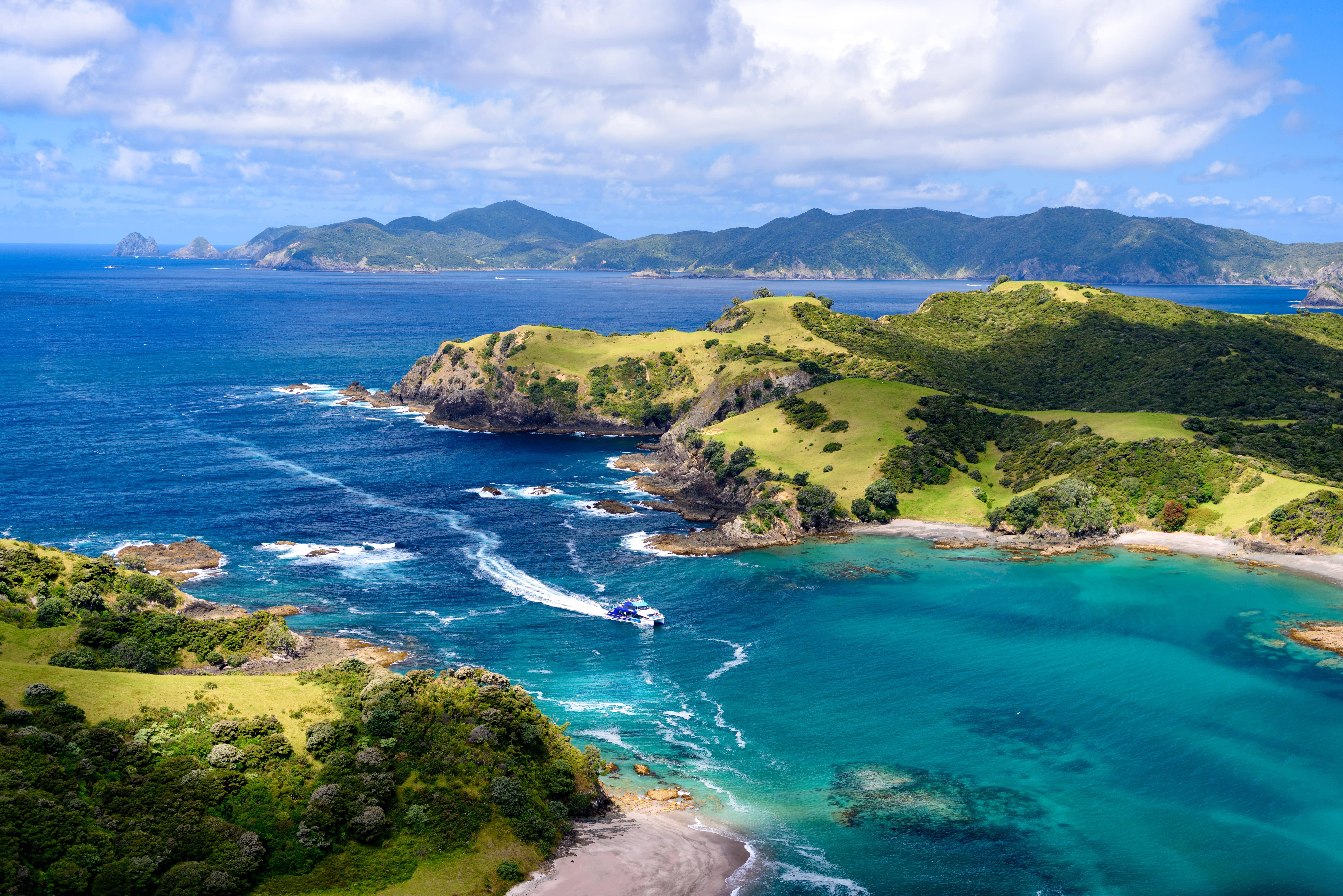
The Hauraki Gulf Marine Park spans 1.2 million hectares east of Auckland, sheltering twenty-five cetacean species behind a chain of volcanic islands that broke the Pacific swell for eight million years. Bryde's whales, the only baleen whale resident year-round in New Zealand waters, surface between Rangitoto and Waiheke in pursuit of pilchard schools that swirl beneath terns and gannets. Common dolphins travel in pods of fifty to two hundred, their coordinated feeding runs visible from the cliffs of Mahurangi Peninsula. Bottlenose dolphins patrol the inner gulf in stable family groups, returning to the same kelp beds and sandstone reefs across decades. Auckland whale and dolphin watching operates from Berth 9 at the Eastern Viaduct Marina, where purpose-built catamarans depart twice daily into the gulf's cetacean corridors. The industry emerged in the early 2000s when Department of Conservation guidelines formalised approach distances and engine protocols. Operators now maintain a hundred-metre buffer from whales and fifty metres from dolphins, cutting engines when animals initiate closer contact. Hydrophones capture echolocation clicks and whistles; onboard naturalists interpret the acoustic signatures of hunting, socialising, and travel modes. Sightings occur on eighty-five percent of departures between October and April, the austral summer months when plankton blooms draw baitfish into the gulf's nutrient upwellings. The Hauraki Gulf Whale and Dolphin Eco-Cruise, the region's longest-running marine tour, crosses the Rangitoto Channel to the deeper waters east of Motutapu Island, where the continental shelf drops from forty metres to six hundred within two nautical miles. This bathymetric edge concentrates prey and predators alike. Orca hunt stingrays in the shallows off Ponui Island each February and March. Humpback whales, migrating north from Antarctic feeding grounds, rest in the lee of Great Barrier Island between June and September, though sightings remain opportunistic. The volcanic topography that defines the gulf — Rangitoto's symmetrical cone, the eroded caldera of Waiheke's eastern cliffs — provides orientation points for both navigators and cetaceans, whose seasonal movements track the same underwater ridges human sailors charted in the 1840s. Cruise vessels range from forty-passenger catamarans with enclosed cabins to smaller rigid inflatables that seat twelve. Departures from Viaduct Harbour thread past the America's Cup bases and Westhaven Marina before reaching open water at North Head. Return journeys often detour through the inner Waitemata Harbour when dolphins are reported near Devonport or Torpedo Bay. The Auckland cetacean tours contribute sighting data to the University of Auckland's marine mammal database, a longitudinal study tracking individual dolphins through photo-identification of dorsal fin notches and scars.
"The volcanic topography that defines the gulf provides orientation points for both navigators and cetaceans, whose seasonal movements track the same underwater ridges human sailors charted in the 1840s."
A step-by-step walkthrough of the visit — what you'll see, how long each stage takes, and the details that matter.
You board at Berth 9 in the Eastern Viaduct Marina, stepping from the pontoon onto a wide catamaran deck fitted with bench seating and overhead canopies. The skipper briefs the group on Marine Mammal Protection Act protocols while the vessel motors past the superyacht berths and America's Cup syndicates, clearing the harbour entrance within ten minutes. The city skyline recedes as you pass North Head's gun emplacements and Rangitoto's black scoria slopes rise to starboard. Twenty minutes offshore, the naturalist points to a disturbance on the surface: a pod of common dolphins, perhaps eighty strong, racing toward the bow. You move to the forward deck as they arrive, their streamlined bodies crisscrossing beneath the hull in perfect synchrony, exhaling in sharp bursts before diving again. The hydrophone speaker crackles with high-frequency clicks, the dolphins' sonar probing the water ahead. The pod stays with the boat for five minutes, then peels away toward a diving gannet flock that marks a baitfish concentration. Farther out, beyond Motutapu's eastern cliffs, the spotter calls a blow at two o'clock. The engines cut. A Bryde's whale surfaces thirty metres off the beam, its grey back rolling through the swell, dorsal fin small and hooked. It breathes three times, then arches and descends, flukes staying submerged. You watch the patch of disturbed water smooth over, then the boat resumes its search pattern across the shelf edge.
We are open Monday through Sunday from 06:30–20:00.
Yes, the vessels accommodate accessibility needs, but please notify staff in advance.
We recommend the 06:30–10:30 window for calmer seas and better marine activity.
Yes, cameras are encouraged, but we recommend using a neck strap.
You may bring water and snacks, though some amenities are provided.
Parking is available at the nearby Downtown Car Park.
Yes, children are welcome and must be accompanied by an adult.
Cancellations made 24 hours prior are eligible for a full refund.
Wear warm, windproof layers and sturdy flat-soled shoes.